이상원 교수 (Sangwon Lee, Ph.D.)
고려대학교 미디어대학 부교수 [Associate Professor, College of Media & Communication, Korea University]
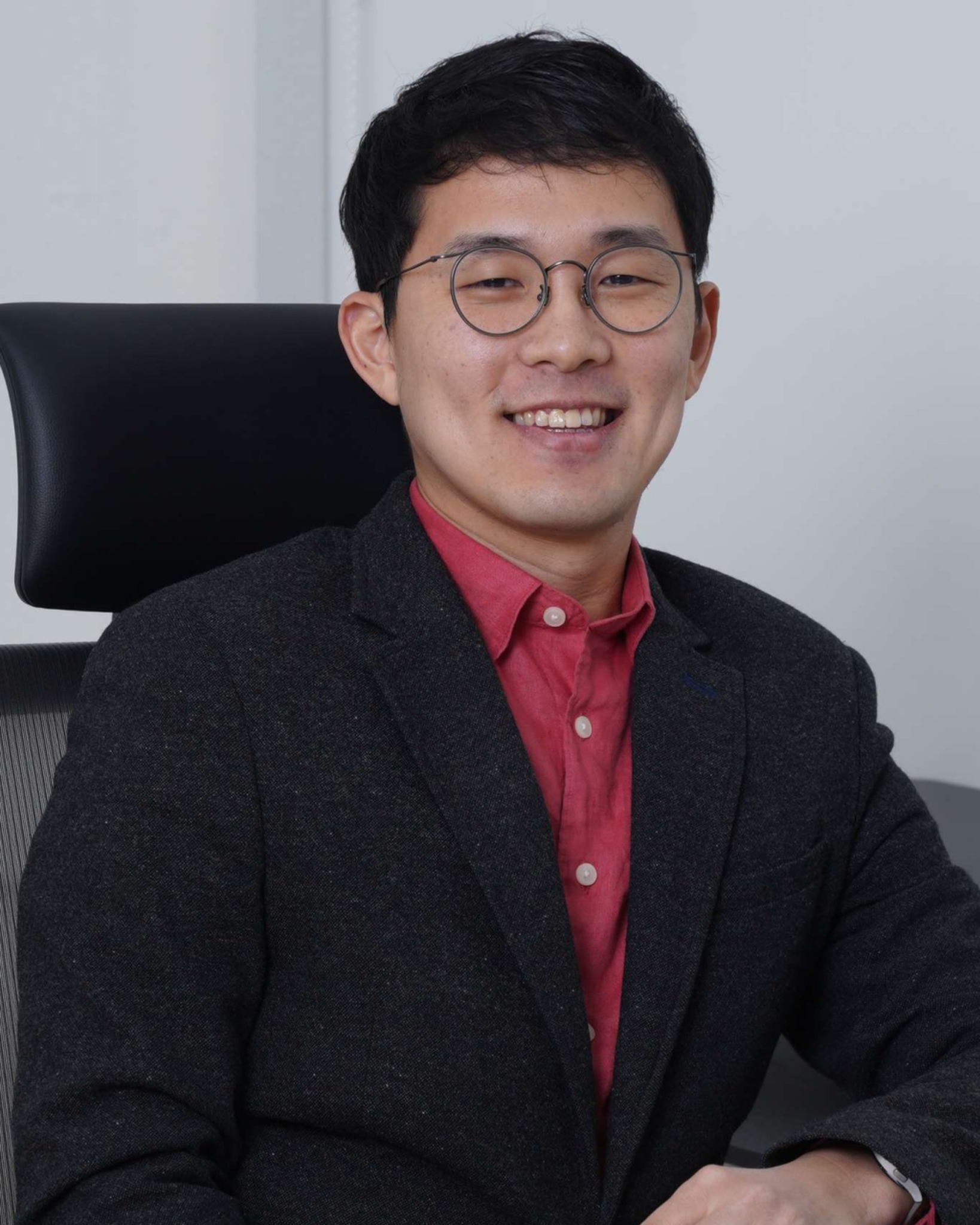
PROFILE [프로필]
이상원 교수는 고려대학교 미디어학부를 졸업하고 미시간주립대학교에서 석사학위를, 위스콘신대학교 매디슨에서 커뮤니케이션학 박사학위를 받았다. 고려대학교로 부임하기 전에는 미국 뉴멕시코주립대학교 커뮤니케이션학과 조교수로 재직했다. 국내외 저명 학술지에 약 50편의 논문을 게재했으며, 여러 국제 학회 및 학술지로부터 연구·논문 관련 상을 수상했다. 현재 Human Communication Research의 부편집장(Associate Editor)으로 활동하고 있다. 연구와 교육이 서로 영향을 주고 발전시키는 관계라고 생각하며, 연구자이자 교육자로서의 역할을 함께 중요하게 여기고 있다.
Sangwon Lee received his B.A. from the School of Media & Communication at Korea University, his M.A. from Michigan State University, and his Ph.D. in Communication Arts from the University of Wisconsin–Madison. Before joining Korea University, he was an Assistant Professor in the Department of Communication Studies at New Mexico State University. He has published nearly 50 articles in leading domestic and international journals and received research and article awards from several academic associations and journals. He currently serves as an Associate Editor of Human Communication Research. He embraces a teacher-scholar model in which research and teaching mutually inform and strengthen one another.
RESEARCH INTERESTS [연구 분야]
미디어 효과의 관점에서 소셜미디어와 인공지능(AI) 등 뉴미디어 테크놀로지가 개인의 태도와 행동, 정보 판단에 미치는 영향과, 더 나아가 개인과 사회에 가져오는 긍정적·부정적 결과를 연구합니다. 정치, 저널리즘, 엔터테인먼트 등 다양한 영역을 아우르며, 최근에는 다음 두 가지 주제에 특히 관심을 두고 있습니다.
- 인공지능(AI)과 인지·사회적 영향: AI에 대한 의존과 이용이 학습, 지식 축적, 정보 검증과 같은 인지 과정뿐 아니라 개인의 웰빙과 사회적·정치적 태도 및 행동에 미치는 영향
- 미디어와 사회적 갈등: 다양한 미디어와 테크놀로지가 서로 다른 사회집단 간 차이와 갈등을 증폭하거나 완화하는 조건과 메커니즘
연구 방법론: 정량적 방법(서베이·실험), 정성적 방법(심층 인터뷰·FGI), 컴퓨테이셔널 방법을 폭넓게 활용합니다.
From a media-effects perspective, my research examines how emerging media technologies, including social media and artificial intelligence (AI), influence individuals’ attitudes, behaviors, and information judgments, as well as their broader positive and negative consequences for individuals and society. My work spans diverse contexts, including politics, journalism, and entertainment, with particular interest in the following areas:
- Cognitive and Social Effects of Artificial Intelligence (AI): How AI use and reliance affect cognitive processes such as learning, knowledge accumulation, and information verification, as well as individual well-being and social and political attitudes and behaviors
- Media and Social Conflict: The conditions and mechanisms through which media and technologies amplify or mitigate differences and conflicts between social groups
Research Methods: I use a broad range of quantitative methods (surveys and experiments), qualitative methods (in-depth interviews and focus groups), and computational approaches.
POSITIONS HELD [경력]
- Associate Professor (2025–Present), College of Media & Communication, Korea University [부교수, 고려대학교 미디어대학]
- Assistant Professor (2024–2025), College of Media & Communication, Korea University [조교수, 고려대학교 미디어대학]
- Assistant Professor (2020–2023), Department of Communication Studies, New Mexico State University, USA [조교수, 뉴멕시코주립대학교 커뮤니케이션학과, 미국]
- Associate Editor (2026–Present), Human Communication Research [부편집장, Human Communication Research]
GRANTS & AWARDS [연구비 및 수상]
- Three-Year Early Career Researcher Grant, National Research Foundation of Korea, Principal Investigator, 2026–2029, KRW 60 million [한국연구재단 신진연구자 지원사업, 연구책임자]
- World’s Top 2% Scientists 2025, Stanford University & Elsevier [세계 상위 2% 연구자, 2025]
- 2025 Michael Pfau Outstanding Article Award, National Communication Association [미국커뮤니케이션학회(NCA) Michael Pfau 우수논문상]
- Excellence in Teaching Award, Korea University, every semester since Spring 2024 [고려대학교 강의 우수상, 2024년 봄학기 이후 매 학기 수상]
- National Science Foundation Grant, Co-Investigator, 2024 [미국 국립과학재단 연구비, 공동연구자]
- PKU–KU Joint Research Funding, Korea University, 2024 [북경대-고려대 공동연구 지원사업 선정]
- Kaid-Sanders Best Political Communication Article of the Year Award, 2nd place, International Communication Association, 2023 [국제커뮤니케이션학회(ICA) 정치커뮤니케이션 분야 Kaid-Sanders 올해의 우수논문상 2위]
- JMCQ Outstanding Article of the Year, 2022 [Journalism & Mass Communication Quarterly 올해의 우수논문상]
- MCS Faculty Research Award, AEJMC Mass Communication and Society Division, 2022 [미국언론학회(AEJMC) 매스커뮤니케이션과 사회 분과 교수 연구상]
전체 연구비 및 수상 내역은 CV에서 확인 [See CV for complete grants and awards]
PUBLICATIONS [논문 및 저서]
Complete publication list based on the current CV. 최신 목록은 Google Scholar에서도 확인할 수 있습니다.
JOURNAL PUBLICATIONS [학술지 논문]
- 49.이상원, 정묘정, & 최지향. (2026). 포털 정치 뉴스 댓글의 이념적 편향성 인식과 규제 태도: 적대적 댓글 지각(Hostile Comment Perception) 효과를 중심으로. 한국언론학보, 70(3), 198–230.
- 48.Jones-Jang, S. M., Kim, N., Chung, M., Choi, J., & Lee, S.* (2026). Can AI Understand the Value of my Poetry Assignment? Critical Role of Perceived AI Task Fit and Outcome Favorability in User Trust. International Journal of Human–Computer Interaction, 1-15.
- 47.Chung, S., Kim, N., Jones-Jang, S., Choi, J., & Lee. S. (2026). I See a Double-Edged Sword: How Self-Other Perceptual Gaps Predict Public Attitudes toward ChatGPT Regulations and Literacy Interventions. New Media & Society, 28, 1316-1337.
- 46.Jung, H., & Lee, S.* (2025). Effects of National Voting Experience During High School on Political Participation: Evidence From South Korea. Social Science Quarterly,106(7), e70113.
- 45.이상원, 최지향, 이재현, & 강하늘. (2025). 광장의 여성 청년과 남성 청년은 어떻게 달랐나: 탄핵촉구집회 참여 대학생의 집회 참여동기, 사회적 자본, 정치효능감의 성별 차이. 정치 커뮤니케이션연구, 78, 123–174.
- 44.이상원 & 최지향. (2025). 무당파는 어떤 시민인가? 순수무당파, 편향적무당파, 약한당파층 의 시민역량, 투표행위, 정치냉소 비교. 사회과학연구논총 41(1), 225-256.
- 43.Goyanes, M., Lee, S.*, Salgado, S., & Gil de Zúñiga, H. (2025). Enhancing Self-Perceived Disinformation Identification in Democracy: The Impact of Fact-Checking Integration into Daily News Consumption Practices. Journal of Broadcasting & Electronic Media, 1-22.
- 42.Jones-Jang, S. M., Chung, M., Choi, J., Kim, N., & Lee, S. (2025). Fairness perceptions of AI in grading systems: Examining how discontent with the status quo and outcome favorability reduce AI reluctance. Computers and Education: Artificial Intelligence.
- 41.Choi, J., Lee, S.*, Jones-Jang M, Chung, M., & Kim, N (2025). Distinct roles of distrust, cynicism, and indifference: Investigating how antipathy toward news media increases misinformation belief through passive news consumption. Online Information Review, 49, 1080-1097.
- 40.Lee, S., Choi, J., Jones-Jang M, Kim, D., & Kenski, K (2025). Reinforcing Cycles? Empirical Reflections on the Relationship between Media Cynicism and Political Cynicism. Mass Communication and Society
- 39.Ahmed, S., Gil-Lopez, T., Lee, S., & Masood, M. (2025). Pathways from incidental news exposure to political knowledge: Examining paradoxical effects of political discussion on social media with strong and weak ties. New Media & Society.
- 38.Lee, S., Choi, J., & Ahn, C. (2025). Hate Prompts Participation: Unraveling the Causal Relationship between Affective Polarization and Political Participation. New Media & Society, 27(1), 443–461.
- 37.Ahmed, S., & Lee, S. (2025). The inhibition effect: Privacy concerns disrupt the positive effects of social media use on online political participation. New Media & Society, 27(1), 203-224.
- 36.Lee, S., & Valenzuela, S. (2024). A Self-Righteous, Not a Virtuous, Circle: Proposing a New Framework for Studying Media Effects on Knowledge and Political Participation in a Social Media Environment. Social Media+ Society, 10(2).
- 35.Lee, S., Taylor, M., Ahmed, S., & Moon, W (2024). Going Beyond Political Ideology: A Computational Analysis of Civic Trust in Science. Public Understanding of Science, 33(8) 1046–1062.
- 34.이상원 & 최지향. (2025). 한국의 인지적 무당파는 누구이며 왜 양대 정당과 단절되었는 가?: 심층인터뷰 결과를 중심으로. 정치커뮤니케이션연구, 72, 49-95.
- 33.Lee, S., Kim, N., Chung, M., & Jones-Jang, M (2024). Who is using ChatGPT and why?: Extending the Unified Theory of Acceptance and Use of Technology (UTAUT) model. Information Research.
- 32.Lee, S., Tandoc Jr, E. C., & Diehl, T. (2024). Uninformed and misinformed: Advancing a theoretical model for social media news use and political knowledge. Digital Journalism, 12(4), 431-450.
- 31.Lee, S., Jones-Jang, M., Chung, M., Lee, EWJ., & Diehl, T. (2024). Examining the Role of Distrust in Science and Social Media Use: Effects on Susceptibility to COVID Misperceptions with Panel Data. Mass Communication and Society, 27(4), 653-678.
- 30.Lee, S., & Jones-Jang, S. M. (2024). Cynical nonpartisans: The role of misinformation in political cynicism during the 2020 US presidential election. New Media & Society, 26(7), 4255-4276.
- 29.Jung, H., & Lee, S. (2024). Social media use and polarized redistributive attitudes: a comparative and causal perspective. Information, Communication & Society, 27(3), 411-431.
- 28.Tandoc Jr, E. C., Lee, J. C. B., Lee, S., & Quek, P. J. (2024). Does length matter? The impact of fact-check length in reducing COVID-19 vaccine misinformation. Mass Communication and Society, 27(4), 679-709.
- 27.Valenzuela, S., Diehl, T., Lee, S., & Halpern, D. (2024). A panel study on the dynamics of social media use and conspiracy thinking. Media Psychology, 27(6), 817-841.
- 26.Lee, S., Chung, M., Kim, N., & Jones-Jang, M (2024). Public Perceptions of ChatGPT: Exploring How Non-Experts Evaluate Its Risks and Benefits. Technology, Mind, and Behavior.
- 25.Lee, S., Gil de Zúñiga H., & Munger, K. (2023). Antecedents and consequences of fake news exposure: a two-panel study on how news use and different indicators of fake news exposure affect media trust. Human Communication Research, 49(4), 408-420.
- 24.Boulianne, S., & Lee, S. (2023). Facebook and the global dimensions of protest participation in France, Canada, the United States, and the United Kingdom. French Politics, 21(2), 155-178.
- 23.Lee, S., Tandoc, E., & Lee, EWJ. (2023). Social Media May Hinder Learning about Science; Social Media’s Role in Learning about COVID-19. Computers in Human Behavior. https://doi.org/10.1016/j.chb.2022.107487
- 22.Lee, S., Liu, W., & Nah, S. (2023). Advancing communication infrastructure theory: The moderating roles of citizen journalism practice and political trust on online civic participation. Mass Communication and Society, 26(5), 827-851.
- 21.Lee, S., & Ahmed, S. (2023). Social Media in Black Lives Matter Protests: Amplifying or Reducing Gaps in Protest Participation? Journal of Information Technology & Politics, 1-17.
- 20.Boulianne, S. & Lee, S. (2022). Conspiracy Beliefs, Misinformation, Social Media Platforms, and Protest Participation. Media and Communication, 10(4), 30-41.
- 19.Chung, D., Jeong, H., Lee, S., & Nah, S. (2022). The Roles of News Comment Engagement and News Portal Literacy on News Portal Credibility. Asian Journal of Communication, 1- 21.
- 18.Van Swol, L., Lee, S., & Hutchins, R. (2022). The Banality of Insurrection: The Role of Group Dynamics and Communication of Norms in Polarizing Violence on January 6. Group Dynamics: Theory, Research, and Practice, 26, 239–251.
- 17.Morales, G., Lee, S., Bradford, A., De Camp, A., & Tandoc Jr, E. C. (2022). Exploring Vaccine Hesitancy Determinants During the COVID-19 Pandemic: An In-Depth Interview Study. SSM - Qualitative Research in Health. https://doi.org/10.1016/j.ssmqr.2022.100045
- 16.Diehl, T. & Lee, S. (2022). Credibility of Misinformation as News on Social Media: Moderating Effects of News Finds Me Perception. Computers in Human Behavior. https://doi.org/10.1016/j.chb.2021.107121
- 15.Lee, S., Nanz, A., & Heiss, R. (2022). Platform-dependent Effects of Incidental Exposure to Political News on Political Knowledge and Political Participation. Computers in Human Behavior. https://doi.org/10.1016/j.chb.2021.107048
- 14.Lee, S., Diehl, T., & Valenzuela, S. (2022). Rethinking the Virtuous Circle Hypothesis on Social Media: Subjective Versus Objective Knowledge and Political Participation. Human Communication Research, 48, 57-87.
- 13.Lee, S., & Xenos, M. (2022). Incidental News Exposure via Social Media and Political Participation: Evidence of Reciprocal Effects. New Media & Society, 24(1), 178-201.
- 12.Lee, S., Yamamoto, M., & Tandoc Jr, E. C. (2022). Why People Who Know Less Think They Know about COVID-19: Evidence from US and Singapore. Journalism & Mass Communication Quarterly, 99, 44-68.
- 11.Nah, S., Lee, S., & Liu, W. (2022). Community Storytelling Network, Expressive Digital Media Use, and Civic Engagement. Communication Research, 49(3), 327-352.
- 10.Lee, S., Rojas, H., & Yamamoto, M. (2022). Social media, messaging apps, and affective polarization in the United States and Japan. Mass Communication and Society, 25(5), 673- 697.
- 9.Koo, Z.X., Su, M.-H, Lee, S., Ahn, S, & Rojas, H. (2021). What motivates people to correct misinformation? Examining the effects of third-person perceptions and perceived norms. Journal of Broadcasting & Electronic Media, 65, 111-134.
- 8.Carnahan, D., Bergan, D. E., & Lee, S. (2021). Do Corrective Effects Last? Results from a Longitudinal Experiment on Beliefs toward Immigration in the U.S. Political Behavior, 43, 1227-1246.
- 7.Lee, S. (2020). Probing the Mechanisms Through which Social Media Erodes Political Knowledge: the Role of the News-finds-me Perception. Mass Communication and Society, 23, 810-832.
- 6.Lee, S., Nah, S., Chung, D., & Kim, J. (2020). Predicting AI-News Credibility: Communicative Capital or Social Capital or Both?. Communication Studies, 71, 428-447.
- 5.Lee, S. (2019). Connecting Social Media Use with Gaps in Knowledge and Participation in Protest Context: The Case of Candle Light Vigil in South Korea. Asian Journal of Communication, 29, 111-127.
- 4.Lee, S. & Xenos, M. (2019). Social Distraction? Social Media Use and Political Knowledge in Two US Presidential Elections. Computers in Human Behavior, 90, 18-25.
- 3.Lee, S. (2018). The Role of Social Media in Protest Participation: Case of Candle Light Vigil in South Korea. International Journal of Communication, 12, 1523-1540.
- 2.Lee, S. & Paik, J.E. (2017). How Partisan Newspapers Represented a Pandemic: the Case of the Middle East Respiratory Syndrome in South Korea. Asian Journal of Communication, 27, 82-96.
- 1.Lee, S. (2017). Implications of Counter-Attitudinal Information Exposure in Further Information Seeking and Attitude Change. Information Research: An International Electronic Journal, 22(3). Retrieved from https://eric.ed.gov/?id=EJ1156395
BOOK CHAPTERS [저서 및 북챕터]
- 4.Lee, S. (2025). Political knowledge. In Elgar encyclopedia of political communication (pp. 256–259). Edward Elgar Publishing.
- 3.Lee, S. (2025). Fake news in Korea. In E. Tandoc jr (Eds.), Fake News Across Asian Countries.
- 2.Lee, S. (2020). Social Media Use and Social Movements and Protests. In J. van den Bulck, E. Scharrer, D. Ewoldsen, & M. L. Mares (Eds.), The International Encyclopedia of Media Psychology (pp. 1745-1751). New York, NY: Wiley.
- 1.Dearing, J.W. & Lee, S. (2016). Diffusion of Innovations. In K. Jensen & R. Craig (Eds.), International Encyclopedia of Communication Theory and Philosophy (pp. 543-548). Hoboken, NJ: Wiley-Blackwell.
SERVICE [학술봉사]
- Associate Editor: Human Communication Research (2026–)
- Editorial Board Member: 한국언론학보, Social Sciences, Korean Journal of Communication
- Ad hoc Reviewer: Journal of Communication, Communication Research, Political Communication, Communication Monographs, Mass Communication and Society, Information, Communication & Society, Digital Journalism, International Journal of Press/Politics, and other journals.